

How to Choose the Right PLC for Industrial Automation Applications? Key Selection Factors and Application Guide
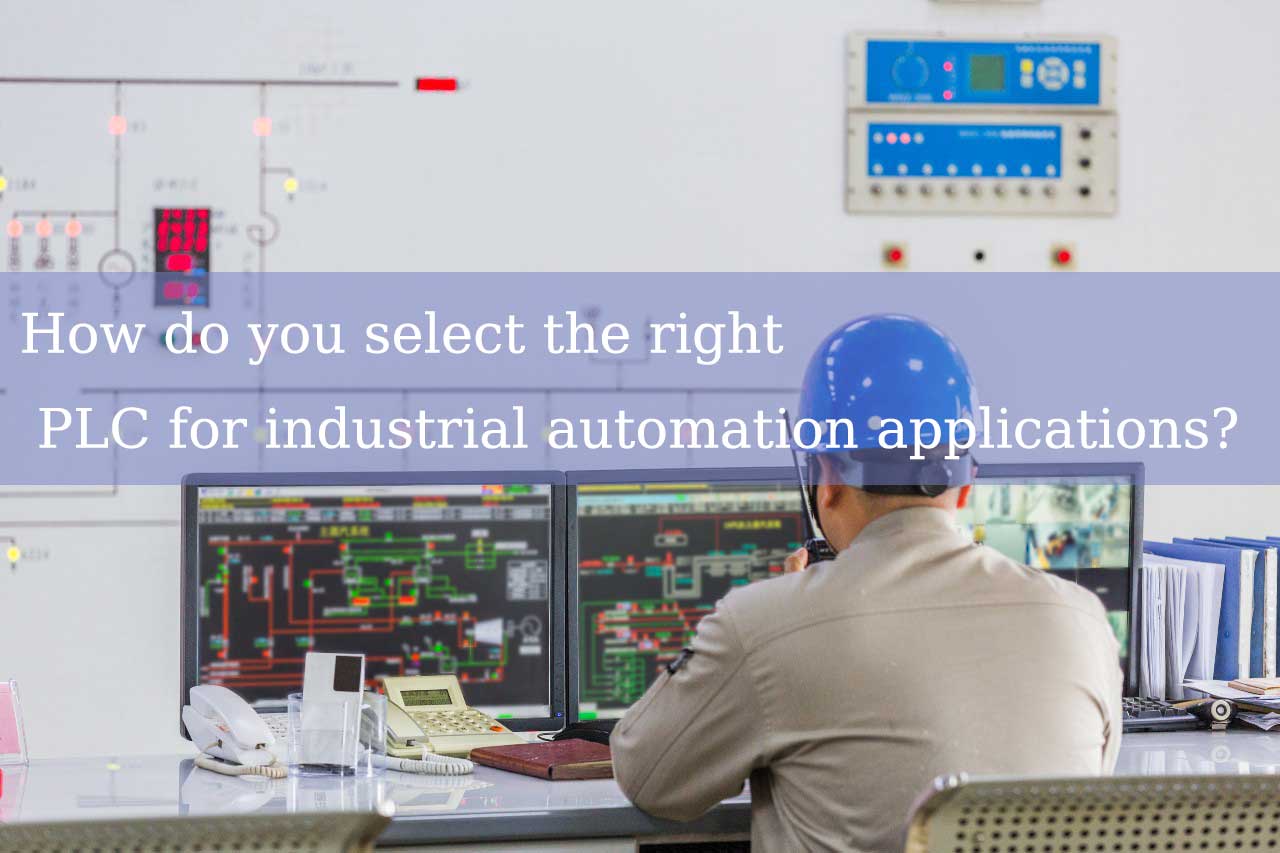
In modern manufacturing, the PLC (Programmable Logic Controller) remains a vital control core within industrial automation systems. From controlling production line equipment to managing robots, conveyor systems, and process control applications, PLCs are responsible for acquiring field signals, executing control logic, and exchanging data with HMIs, variable frequency drives (VFDs), and other industrial equipment.
With the advancement of smart manufacturing, enterprise requirements for PLC systems have evolved beyond basic control functions; there is now a greater focus on processing power, communication compatibility, scalability, and long-term maintenance needs. Consequently, selecting a PLC requires a comprehensive evaluation based on specific application scenarios and system requirements.
The Role of PLCs in Industrial Automation Systems
PLCs are primarily used for automation control in industrial settings. They acquire signals from sensors, buttons, and equipment status via input modules, and then control the operation of output devices based on pre-programmed logic.
Modern PLC systems typically require connectivity with:
Industrial HMIs (Human-Machine Interfaces)
Variable frequency drives (VFDs) and servo drives
Remote I/O modules
Industrial robot systems
Factory data management platforms
The Allen-Bradley ControlLogix series is typically used for large-scale automation systems, whereas the CompactLogix series is suited for small-to-medium-sized equipment and production line control needs. Different product series offer distinct characteristics regarding CPU performance, I/O expansion capabilities, and communication interfaces.
1. What key factors should be considered when selecting a PLC?
Selecting the PLC performance level based on control requirements
PLC performance must align with the complexity of the equipment control.
Small-scale machinery typically focuses on:
Basic logic control
A limited number of I/O points
Simple communication requirements
In contrast, large-scale automated production systems require:
Higher processing power
Larger program capacity
Capabilities for coordinated control across multiple devices
Therefore, the selection process requires evaluating the number of devices, control tasks, and future expansion needs.
2. Determining PLC configuration based on I/O count
I/O configuration is a critical factor in PLC selection.
Enterprises need to determine:
The number of digital inputs
The number of digital outputs
Analog input requirements
Analog output requirements
If there are plans for future equipment expansion, space for additional modules should be reserved. For instance, modular PLC systems can typically meet production line upgrade needs through the addition of expansion modules.
3. Communication protocols affect system compatibility
Modern industrial environments increasingly rely on data exchange between devices; therefore, PLC communication capabilities are crucial. Common industrial communication protocols include:
EtherNet/IP
PROFINET
Modbus TCP
EtherCAT
PLCs must establish stable connections with HMIs, industrial drives, and other control devices. For instance, when using an industrial variable frequency drive (VFD) to control motor speed, the PLC needs to read operating status and send control commands via the appropriate communication protocol.
4. Industrial environments determine PLC application reliability
Different production environments impose varying requirements on PLC hardware.
Key considerations during selection include:
Operating temperature range
Installation environment
Electrical interference levels
Ingress protection (IP) rating requirements
For example, some industrial sites require equipment to operate continuously for long periods; consequently, the PLC module's design standards, installation method, and environmental adaptability directly impact the system's maintenance cycle.
How to select a PLC for different industry applications?
Manufacturing production lines
The manufacturing industry typically requires PLCs to handle coordinated control across multiple devices, including sensor detection, motor control, and production process management.
Common requirements:
Multi-device communication
Rapid response
System scalability
Packaging machinery
Packaging equipment typically prioritizes:
High-speed control
Precise motion coordination
Integration with servo systems
PLCs require robust motion control support and communication capabilities.
Process industries
Process industries typically require:
Long-term operation
Stable data acquisition
Continuous process control
Therefore, greater emphasis is placed on system reliability and ease of maintenance.
Please read on, stay posted, subscribe, and we welcome you to tell us what you think.


Copyright 2026 @ Xiamen Wusu Network Technology Co., Ltd. .All Rights Reserved.Sitemap | Blog | XML | Privacy Policy
 Network Supported