

Industrial Automation Trends 2026: How PLC Systems Become the Core Control Platform for Smart Manufacturing
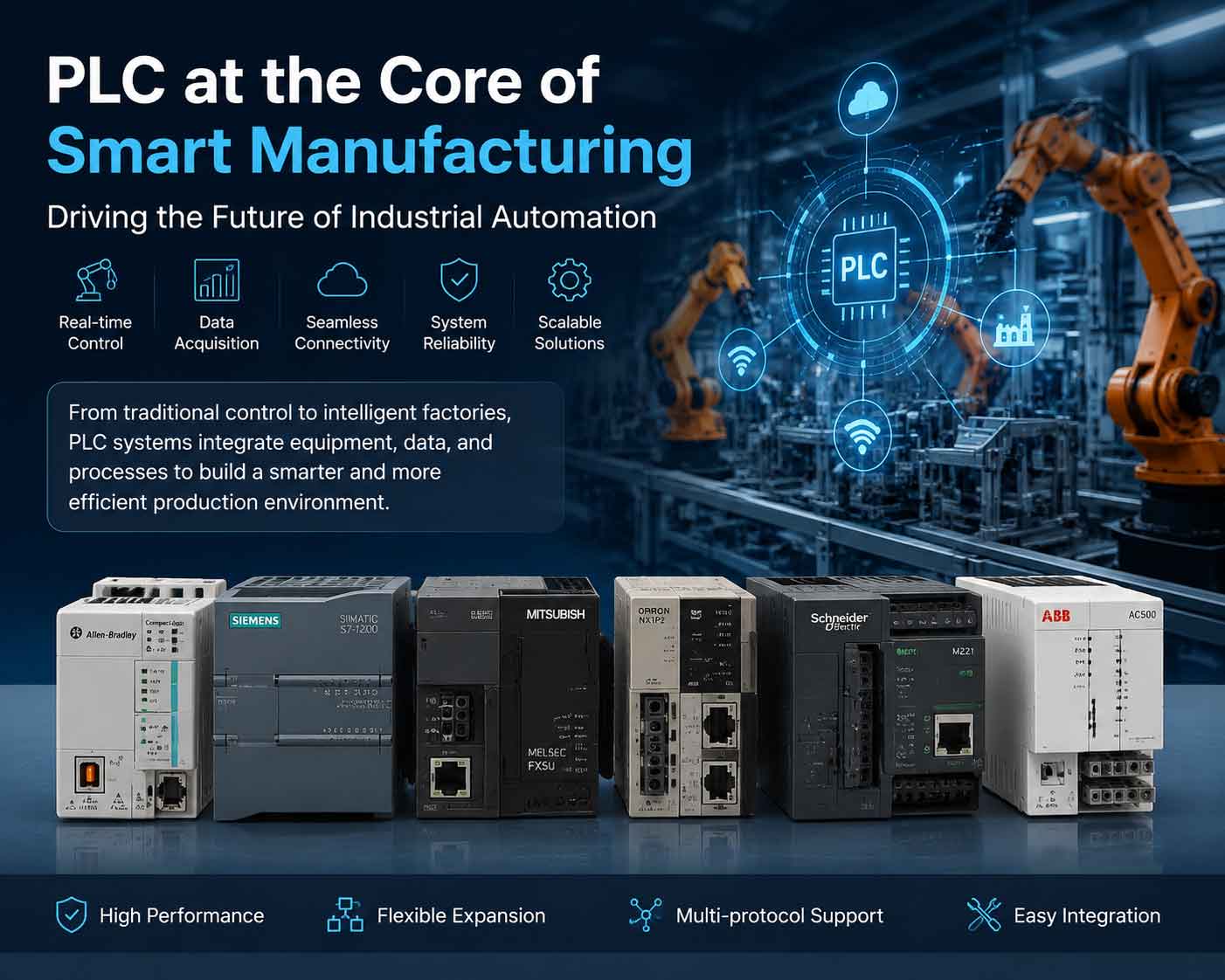
2026 Industrial Automation Trends: How PLCs Are Becoming the Core of Data Control in Smart Factories
Smart Manufacturing Drives the Upgrade of PLC Control Systems
As the manufacturing sector advances toward digitalization and intelligence, traditional PLC control systems are evolving from simple logic control devices into vital nodes that connect equipment, data, and production management systems.
In the past, PLCs were primarily responsible for equipment start/stop operations, sequence control, and field signal processing. Today, however, smart factories require PLCs to simultaneously handle real-time control, equipment communication, data acquisition, and system integration tasks.
The industrial automation industry is accelerating the integration of AI, edge computing, and Industrial IoT technologies, driving the evolution of PLCs from traditional controllers into intelligent control platforms.
What industrial pain points do traditional PLC systems face?
Inability to utilize equipment data in real time ,Many factories still operate PLC systems deployed years ago.
While these systems are generally capable of basic automation control, they struggle to meet modern production demands, leading to issues such as:
Consequently, an increasing number of manufacturing enterprises are considering PLC upgrade solutions—such as adding communication modules or industrial gateways, or replacing existing units with next-generation PLCs—to enhance system data processing capabilities.
Shifting from breakdown repair to predictive maintenance for equipment
Industrial equipment maintenance historically relied on:
Modern automation systems, however, focus more on:
Acting as the on-site control center, the PLC can collect:
Integration with industrial software platforms enables smarter maintenance management.
Summary: PLCs Remain the Core Foundation of Industrial Automation
Although industrial automation is rapidly integrating AI, cloud computing, and edge technologies, the PLC remains the most critical control foundation on the manufacturing floor.
For enterprises upgrading equipment or building smart factories, selecting the right PLC control solution requires a comprehensive assessment of:
From traditional automation to smart manufacturing, the PLC remains a vital bridge connecting equipment with digital production.
Please read on, stay posted, subscribe, and we welcome you to tell us what you think.


Copyright 2026 @ Xiamen Wusu Network Technology Co., Ltd. .All Rights Reserved.Sitemap | Blog | XML | Privacy Policy
 Network Supported